
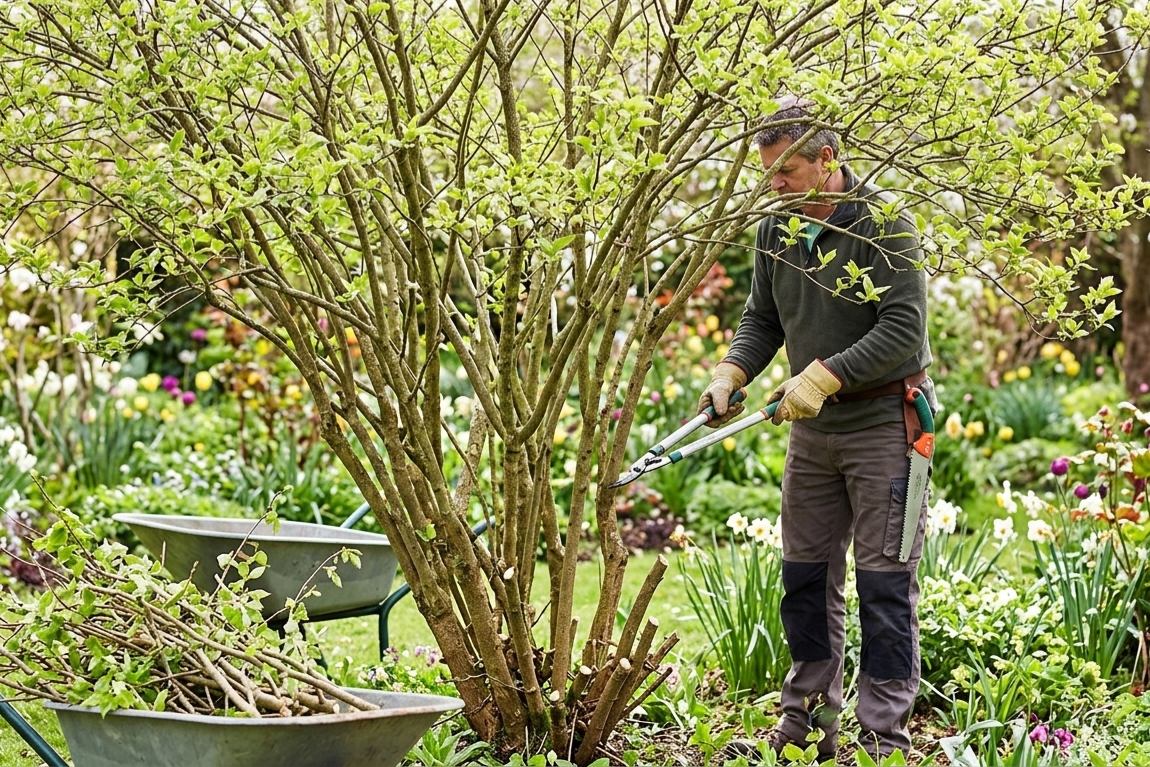
As spring progresses and the vibrant colours of early-flowering shrubs begin to fade, it’s the ideal time to turn your attention to pruning. Properly pruning evergreen shrubs after flowering helps maintain their shape, encourages healthy new growth, and promotes stronger flowering displays the following year.
Whether you have a cottage garden in Wimborne, a family garden in Ferndown, or a larger landscaped property in Broadstone or Corfe Mullen, spring pruning is an important part of ongoing garden maintenance.
At Benita’s Garden Services, we provide professional garden maintenance services across East Dorset, helping homeowners keep their gardens healthy, tidy, and looking their best throughout the year.
Why Prune Evergreen Shrubs After Flowering?
Many evergreen shrubs produce flowers on growth made during the previous year. Pruning immediately after flowering allows the plant plenty of time to develop new growth that will carry next year’s blooms.
Regular pruning can help:
- Maintain a neat and attractive shape
- Encourage denser, bushier growth
- Prevent shrubs from becoming overgrown
- Improve airflow through the plant
- Remove damaged or unhealthy growth
- Promote stronger flowering in future seasons
Different shrubs respond best to different pruning techniques, so understanding the right approach is important.
Light Pruning and Shaping
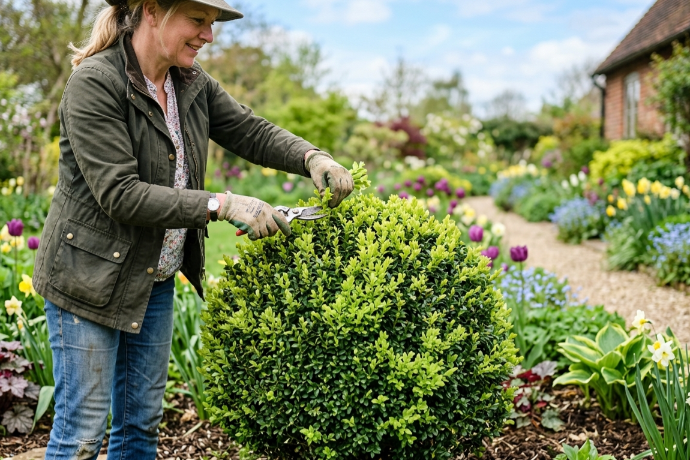
Many evergreen shrubs benefit from a simple trim after flowering. This helps maintain their natural shape while encouraging healthy new growth.
Suitable shrubs include:
- Berberis
- Osmanthus
- Sarcococca
Light pruning is also ideal for:
- Formal hedges
- Topiary
- Early-flowering heathers
A gentle trim can prevent plants from becoming leggy and help create a fuller, more compact appearance throughout the growing season.
Renovation Pruning for Overgrown Shrubs
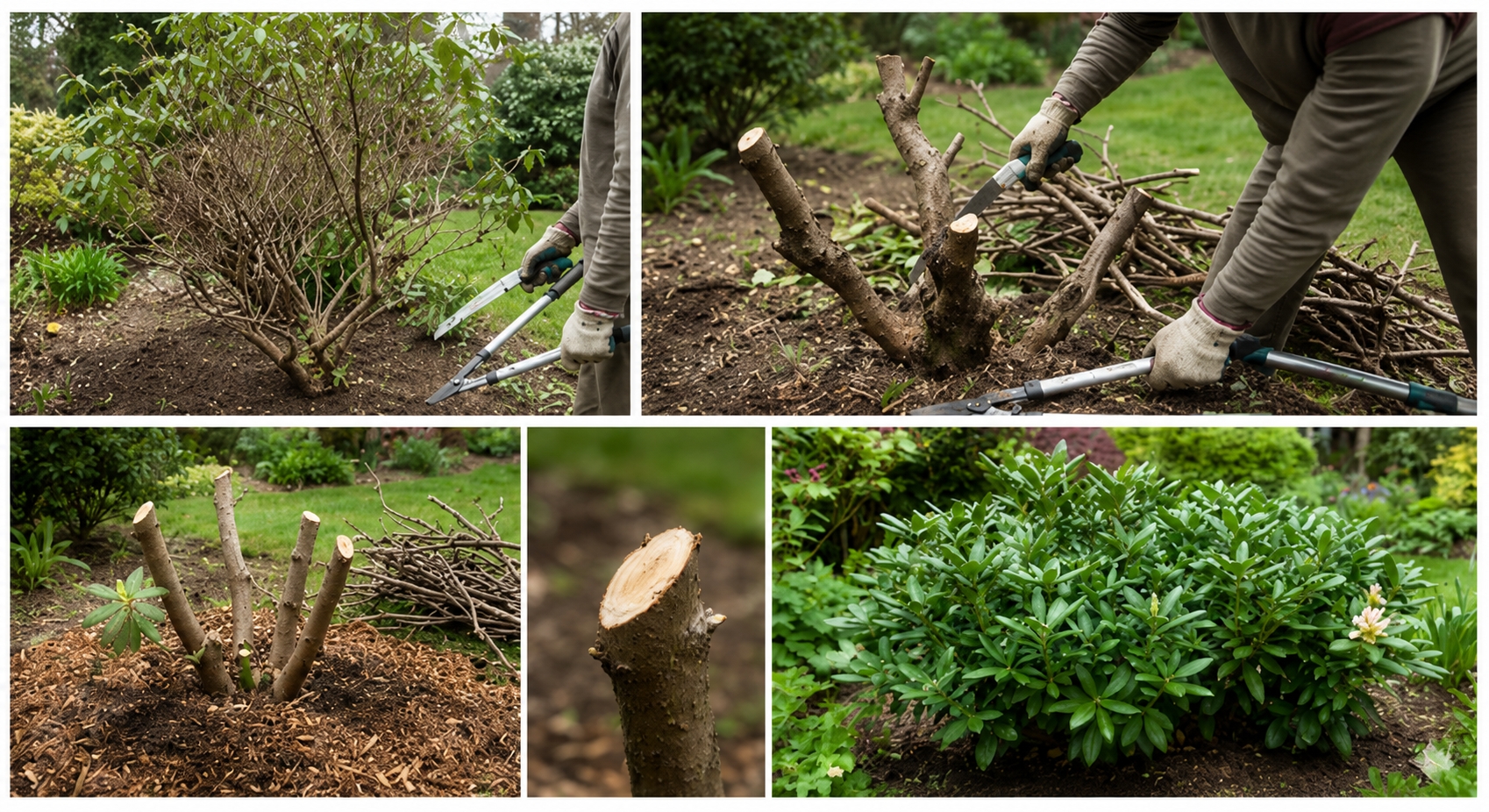
If a shrub has become overgrown, sparse, or woody, renovation pruning may be the best solution.
This involves cutting back more heavily into older growth to encourage fresh shoots and rejuvenate the plant.
Suitable shrubs include:
- Mahonia x media
- Pieris
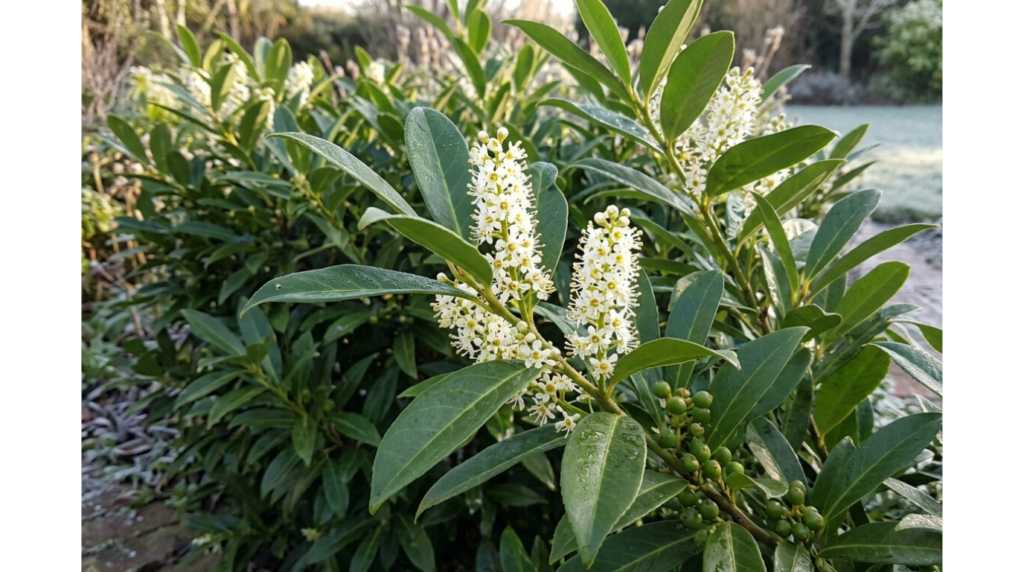
- Cherry Laurel (Prunus laurocerasus)
- Viburnum tinus
Although renovation pruning can look quite drastic initially, many established evergreen shrubs respond extremely well and quickly produce vigorous new growth.
Crown Lifting for Better Garden Structure
Crown lifting involves removing selected lower branches while maintaining the overall height and shape of a shrub.
This technique can:
- Create additional usable space beneath shrubs
- Improve visibility throughout the garden
- Increase light levels for surrounding plants
- Enhance the overall structure of borders and planting schemes
Shrubs commonly suited to crown lifting include:
- Camellia
- Rhododendron
- Viburnum rhytidophyllum
When carried out correctly, crown lifting can transform the appearance of mature shrubs while maintaining their natural character.
Common Evergreen Pruning Mistakes to Avoid
While pruning may seem straightforward, a few common mistakes can affect the health and appearance of your plants.
Some of the most common issues include:
Pruning Too Late
Late summer or autumn pruning can stimulate new growth that may be damaged by winter frosts.
Removing Too Much Growth
Cutting back too aggressively can place unnecessary stress on the plant and delay recovery.
Using Blunt Tools
Clean, sharp secateurs and pruning saws create better cuts and reduce the risk of disease entering the plant.
Ignoring Dead or Diseased Growth
Removing damaged, dead, or diseased branches should always be part of routine maintenance to encourage healthy growth.
When Should You Avoid Pruning Evergreen Shrubs?
Timing is important when it comes to pruning.
It is generally best to avoid major pruning:
- During periods of extreme heat or drought
- Late in the growing season
- During severe frost conditions
- When birds may be actively nesting
Always check shrubs carefully for nesting birds before carrying out any pruning work, as nests are protected by law in the UK.
Composting Evergreen Prunings
Evergreen leaves and branches can take longer to break down than softer garden waste, but there are several ways to speed up the composting process.
For best results:
- Shred branches and larger leaves before composting
- Mix evergreen material with nitrogen-rich waste such as grass cuttings
- Turn the compost regularly to improve airflow
- Maintain a balanced mix of green and brown materials
Over time, these materials can create valuable compost for use throughout the garden.
Evergreen Pruning Advice for Dorset Gardens
Gardens across Dorset often experience conditions that can influence shrub growth, including coastal winds, sandy soils, and periods of dry weather during the summer months.
Regular maintenance helps evergreen shrubs remain healthy and resilient against these environmental challenges.
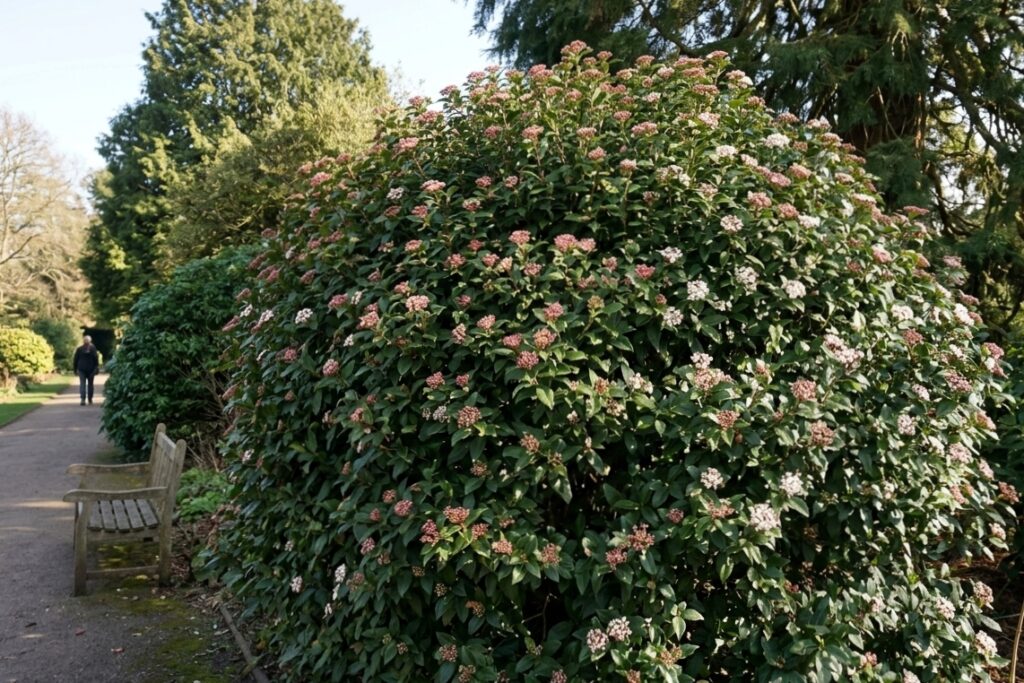
Fast-growing species such as Cherry Laurel, Viburnum, and Photinia are commonly found in Dorset gardens and can quickly become overgrown without routine pruning and maintenance.
A professional pruning programme can help keep these plants under control while preserving their natural beauty and health.
Professional Garden Maintenance Services Across East Dorset
Pruning large shrubs, tackling renovation projects, and working at height can be challenging without the correct equipment and experience.
Benita’s Garden Services provides professional garden maintenance, pruning, and garden tidy-up services throughout:
Whether you need help with seasonal pruning, regular garden maintenance, hedge trimming, or a complete garden refresh, we are here to help.
Contact us today for a free, no-obligation quote and let us help keep your garden looking its best throughout the seasons.